Michael Liut
Co-Director, CORE Lab; Associate Professor, Teaching Stream, University of Toronto Mississauga
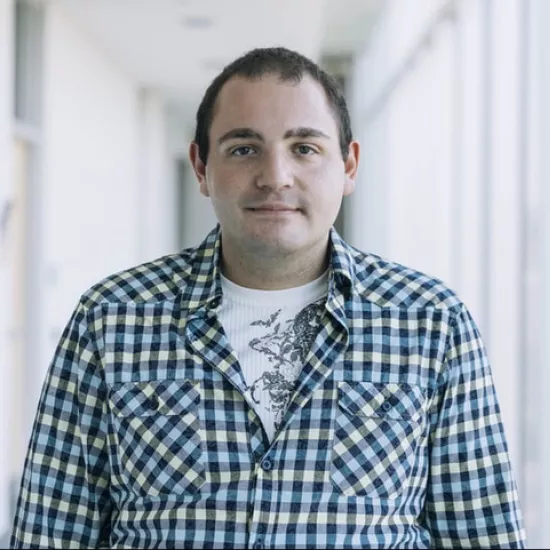
Dr. Michael Liut is the Co-Director of the CORE Lab and an Associate Professor (Computer Science) in the teaching stream in the Department of Mathematical and Computational Sciences at the University of Toronto Mississauga. His research is positioned at the intersection of computer science and education. With a primary research emphasis on HCI and applied AI/ML in education, Dr. Liut delves into the intricate realms of educational technologies, data systems, medicine, cybersecurity, algorithmic design, and student behaviour. His passion lies in harnessing these insights to craft adaptive experimentation and innovative behavioural interventions.
At the heart of his work, Dr. Liut strives to refine and enhance the educational journey. He dedicates considerable effort to the creation and refinement of models, tools, and interventions that aspire to elevate the academic experience for his students. Additionally, he and his research was featured on CBC Metro Morning (2023 & 2024) for his educational research expertise and in University of Toronto Magazine for his AI educational tool (QuickTA).
Dr. Liut has earned the Dean’s Merit Award in 2021, 2022, 2024, 2025, and 2026 for ranking in the top 5% of faculty for his performance excellence, was awarded the Outstanding Faculty Guidance & Support Award by UofT Student Life (2021), and won the University of Toronto’s Early Career Teaching Award (2026)!
Papers
- 109.Runlong Ye, Jing Fan, Angela Zavaleta Bernuy, Oscar Karnalim, Paul Denny, Juho Leinonen, Michael Liut."Correctness, Convergence, and AI-Generated Code Detection: A Longitudinal Study of Student and Large Language Model Code in Introductory Programming" (2026).[doi][]
- 108.Philip Oreopoulos, Michael Liut, Alp Sungu, Nina Low."Making AI Tutoring Productive: Evidence from a Mastery-Based Math Practice Experiment" (2026).[doi][]
- 107.Muniya Fallah, Nicholas Ching, Jessica Wen, Naaz Sibia, Andrew Petersen, Michael Liut, Angela Zavaleta Bernuy."Exploring Language-Based Differences in Student Reflection" Proceedings of the 31st ACM Conference on Innovation and Technology in Computer Science Education V. 2. (2026).[doi][]
- 106.Valeria Ramirez Osorio, Ido Ben Haim, Ahmed Ashraf, Mohammad Mahmoud, Peter Dixon, Bogdan Simion, Michael Liut, Angela Zavaleta Bernuy."Investigating the Impact of Student Usage of Generative AI Tools in Computing Courses" Proceedings of the 31st ACM Conference on Innovation and Technology in Computer Science Education V. 1. (2026).[doi][]
- 105.Naaz Sibia, Jessica Wen, Bogdan Simion, Andrew Petersen, Angela Zavaleta Bernuy, Michael Liut."Non-Native English Speakers in CS1: Expectancy, Value, and Belonging" Proceedings of the 31st ACM Conference on Innovation and Technology in Computer Science Education V. 1. (2026).[doi][]
- 104.Naaz Sibia, Jessica Wen, Zeling Zhang, Runlong Ye, Joshua D. A. Jung, Ilya Musabirov, Bogdan Simion, Carlos Aníbal Suárez, Paul Vrbik, Andrew Petersen, Angela Zavaleta Bernuy, Michael Liut."SQL Beyond Querying: Enhancing SQL Learning with Schema and Data Management" Proceedings of the 31st ACM Conference on Innovation and Technology in Computer Science Education V. 1. (2026).[doi][]
- 103.Maksym Woychyshyn, Stephen Clark, Naaz Sibia, Michael Liut, Bogdan Simion."SSDVis: Teaching Students Modern OS Concepts in a Flash" Proceedings of the 31st ACM Conference on Innovation and Technology in Computer Science Education V. 1. (2026).[doi][]
- 102.Rita Garcia, Angela Zavaleta Bernuy, Dennis J. Bouvier, Sarah Heckman, B. Kern, Sophia Krause-Levy, Michael Liut, U. Nasir, Yuhan Pan, Juliane Sperling."Towards a Comprehensive Understanding of Replication in Computing Education" Proceedings of the 31st ACM Conference on Innovation and Technology in Computer Science Education V. 2. (2026).[doi][]
- 101.Suqing Liu*, Runlong Ye*, Christopher Eaton, Bogdan Simion, Michael Liut."A Comparative Study of Student Perspectives on Technical Writing Feedback Quality: Evaluating LLMs, SLMs, and Humans in Computer Science Topics" International Conference on Artificial Intelligence in Education. (2026).[doi][]
- 100.Naaz Sibia, Jessica Wen, Amber Richardson, Yashika Jain, Khushi Malik, Bogdan Simion, Carolina Nobre, Angela Zavaleta Bernuy, Andrew Petersen, Michael Liut."Code as Anchor, Memory and Metaphor as Support: Learner Experiences with Multi-View Visualizations" Proceedings of the 2026 ACM Conference on International Computing Education Research Vol. 1. (2026).[doi][]
- 99.Yuri Noviello, Naaz Sibia, Anastasiia Birillo, Thomas Overklift Vaupel Klein, Michael Liut, Gosia Migut."AI-Generated Traces for Novice Programmers: Learning Effects and Learner Differences in a Multi-Institutional Study" Proceedings of the 31st ACM Conference on Innovation and Technology in Computer Science Education V. 1. (2026).[doi][]
- 98.Paul Denny, Juho Leinonen, A. Hellas, Sami Sarsa, Michael Liut, Hassan Khosravi."Assessing the Quality and Diversity of Student- and AI-Generated Programming Exercises from Limited Examples: Empirical Insights from a Large-Scale Blind Evaluation" Proceedings of the 28th Western Canadian Conference on Computing Education. (2026).[doi][]
- 97.Franco Ortiz*, Runlong Ye*, Michael Liut."Beyond One-Size-Fits-All Exercises: Personalizing Computer Science Worksheets with Large Language Models" Proceedings of the 31st ACM Conference on Innovation and Technology in Computer Science Education V. 1. (2026).[doi][]
- 96.Ananya Bhattacharjee, Michael Liut, Matthew Jörke, Diyi Yang, E. Brunskill."Generative Experiences for Digital Mental Health Interventions: Evidence from a Randomized Study" ArXiv. (2026).[doi][]
- 95.Benjamin T. Kaveladze, J. Voelkel, M. Stagnaro, Mingjing Huang, Amanda E Smock, E. Sullivan, Yao Xu, M. McCall, J. Zapata, Syed Ishtiaque Ahmed, Ananya Bhattacharjee, Iva Georgieva, Rosa Hernandez-Ramos, Kenneth S Huber, Julia K. Jennings, Arianna C. Kirk, R. Knowles, Rachel Kornfield, M. Lind, Michelle Liu, Michael Liut, A. Mariakakis, Ali M. Mattu, Adam P. McGuire, J. Meyerhoff, Alissa J. Mrazek, M. Mrazek, David C. Mohr, R. Morris, C. Mosunic, Hana Nip, Allen Olson-Urtecho, Jessa R. Podell, Dustyn S Ransom, Shireen Rizvi, Matthew W. Southward, S. Stoeckl, Madison E. Taylor, Amy R Texter, Calvin Tower, Angelique N. Trotter, J. J. Williams, Katherine E. Wislocki, Elijah J. Woodson, John Protzko, Lorenzo Lorenzo‐Luaces, Stephen M. Schueller, Matthew K Nock, J. Schleider."A crowdsourced megastudy of 12 digital single-session interventions for depression in US adults" Nature Human Behaviour. (2026).[doi][]
- 94.Ruiwei Xiao, Runlong Ye, Xinying Hou, Jessica Wen, H. Kumar, Michael Liut, John C. Stamper."Transforming GenAI Policy to Prompting Instruction: An RCT of Scalable Prompting Interventions in a CS1 Course" ArXiv. (2026).[doi][]
- 93.Runlong Ye, Oliver Huang, Jessica He, Michael Liut."Exploring Emerging Norms of AI Attribution and Disclosure in Programming Education" ArXiv. (2026).[]
- 92.Runlong Ye, Naaz Sibia, Angela Zavaleta Bernuy, Tingting Zhu, Carolina Nobre, Viktoria Pammer-Schindler, Michael Liut."From Toil to Thought: Designing for Strategic Exploration and Responsible AI in Systematic Literature Reviews" Proceedings of the 31st International Conference on Intelligent User Interfaces. (2026).[doi][]
- 91.Runlong Ye, Oliver Huang, Patrick Lee, Michael Liut, Carolina Nobre, Ha-Kyung Kong."Reflexis: Supporting Reflexivity and Rigor in Collaborative Qualitative Analysis through Design for Deliberation" Proceedings of the 2026 CHI Conference on Human Factors in Computing Systems. (2026).[doi][]
- 90.Zijian Zhang, Fangshi Du, Xingjian Liu, Pan Chen, Oliver Huang, Runlong Ye, Michael Liut, Alán Aspuru-Guzik."TreeWriter: AI-Assisted Hierarchical Planning and Writing for Long-Form Documents" ArXiv. (2026).[doi][]
- 89.Oscar Karnalim, Hapnes Toba, M. Wijanto, Yehezkiel David Setiawan, Nico Surantha, Michael Liut."Detecting GenAI assistance in programming assessments with over-uniqueness and sample matching" Discover Computing. (2026).[doi][]
- 88.Jenny Yoojeong Oh, Michael Jongho Moon, Michael Liut, Marko Choi, Karen Huynh-Wong, Nathan Taback."A Randomized Study Comparing the Effectiveness of an Untrained versus Trained Chatbot—with Access to Course Content—in an Introductory Mathematical Statistics Course" TSpace, University of Toronto. (2026).[]
- 87.Nihal Haque, Ervin Sejdic, Michael Liut, Roland Mollanji, Philkyung Shin, Duska Kennedy, Ghadir Ali."Transforming Hospitals with Artificial Intelligence: Applications in Clinical Education and Patient Care" Conference on Artificial Intelligence in Medicine in Europe. (2026).[doi][]
- 86.Naaz Sibia, Jessica Wen, Amber Richardson, Yashika Jain, Angela Zavaleta Bernuy, Bogdan Simion, Andrew Petersen, Carolina Nobre, Michael Liut."From State to Structure: Towards Abstraction Support in CS2" Proceedings of the 25th Koli Calling International Conference on Computing Education Research. (2025).[doi][]
- 85.Caroline Pechenik, Angela Zavaleta Bernuy, Selina Marianna Shah, Shirley de Wit, Dr. Emmanuel Kolog Awuni, Oscar Karnalim, M. Farghally, Carlos Aníbal Suárez, Jack Parkinson, Leo Porter, Rodrigo Duran, Paul Vrbik, Brian Harrington, Lisa Zhang, Michael Liut, Andrew Petersen."The Impostor Phenomenon in the Global Computing Graduate Student Population" Proceedings of the ACM Global on Computing Education Conference 2025 Vol 1. (2025).[doi][]
- 84.Xinying Hou, Ruiwei Xiao, Runlong Ye, Michael Liut, John C. Stamper."Exploring Student Choice and the Use of Multimodal Generative AI in Programming Learning" Proceedings of the 57th ACM Technical Symposium on Computer Science Education V.1. (2025).[doi][]
- 83.Naaz Sibia, Valeria Ramirez Osorio, Jessica Wen, Rutwa Engineer, Angela Zavaleta Bernuy, Andrew Petersen, Michael Liut, Carolina Nobre."From Code to Concept: Evaluating Multiple Coordinated Views in Introductory Programming" ArXiv. (2025).[doi][]
- 82.Victor-Alexandru Pădurean, Tung Phung, Nachiket Kotalwar, Michael Liut, Juho Leinonen, Paul Denny, A. Singla."Humanizing Automated Programming Feedback: Fine-Tuning Generative Models with Student-Written Feedback" ArXiv. (2025).[doi][]
- 81.Benjamin T. Kaveladze, J. Voelkel, M. Stagnaro, Mingjing Huang, Amanda E Smock, Erin Sullivan, Yao Xu, M. McCall, J. Zapata, S. Ishtiaque, Ananya Bhattacharjee, I. Georgieva, Rosa Hernandez-Ramos, Kenneth P. Huber, Julia L Jennings, Arianna C. Kirk, Rachel Kornfield, R. Knowles, M. Lind, Michelle Liu, Michael Liut, A. Mariakakis, Ali M. Mattu, Adam P. McGuire, J. Meyerhoff, Alissa J. Mrazek, M. Mrazek, David C. Mohr, R. Morris, C. Mosunic, Hana Nip, Allen Olson-Urtecho, Jessa R. Podell, Dustyn S Ransom, Shireen Rizvi, Matthew W. Southward, S. Stoeckl, Madison E. Taylor, Amy R Texter, Angelique N. Trotter, Calvin Tower, J. Williams, Elijah J. Woodson, Katherine E. Wislocki, John Protzko, Lorenzo Lorenzo-Luaces, Stephen M. Schueller, M. Nock, Jessica L Schleider."A Crowdsourced Megastudy of 12 Digital Single-Session Interventions for Depression in American Adults" Research Square. (2025).[doi][]
- 80.Sebastian Gürtl, Gloria Schimetta, David Kerschbaumer, Michael Liut, Alexander Steinmaurer."Automated Feedback on Student-Generated UML and ER Diagrams Using Large Language Models" ArXiv. (2025).[doi][]
- 79.Zijian Zhang, Pan Chen, Fangshi Du, Runlong Ye, Oliver Huang, Michael Liut, Alán Aspuru-Guzik."TreeReader: A Hierarchical Academic Paper Reader Powered by Language Models" 2025 IEEE Symposium on Visual Languages and Human-Centric Computing (VL/HCC). (2025).[doi][]
- 78.Suqing Liu, Lisa Zhang, Oscar Karnalim, Michael Liut."Summarizing Computer Science Teaching Assistant Feedback with Large Language Models" 2025 IEEE 49th Annual Computers, Software, and Applications Conference (COMPSAC). (2025).[doi][]
- 77.Ananya Bhattacharjee, S. Xu, Pranav Rao, Yuchen Zeng, J. Meyerhoff, Syed Ishtiaque Ahmed, David C. Mohr, Michael Liut, A. Mariakakis, Rachel Kornfield, Joseph Jay Williams."Perfectly to a Tee: Understanding User Perceptions of Personalized LLM-Enhanced Narrative Interventions" Proceedings of the 2025 ACM Designing Interactive Systems Conference. (2025).[doi][]
- 76.Runlong Ye, Zeling Zhang, Boushra Almazroua, Michael Liut."Beyond Autocomplete: Designing CopilotLens Towards Transparent and Explainable AI Coding Agents" ArXiv. (2025).[doi][]
- 75.Ruiwei Xiao, Xinying Hou, Runlong Ye, Majeed Kazemitabaar, Nicholas Diana, Michael Liut, John C. Stamper."Improving Student-AI Interaction Through Pedagogical Prompting: An Example in Computer Science Education" ArXiv. (2025).[doi][]
- 74.Michael Liut, S. Bhowmick, Abdussalam Alawini."Fourth International Workshop on Data Systems Education (DataEd'25)" Companion of the 2025 International Conference on Management of Data. (2025).[doi][]
- 73.Carlos Aníbal Suárez, Mauricio Castro, Mariuxi Leon, Carlos Martín-Barreiro, Michael Liut."Improving SVM performance through data reduction and misclassification analysis with linear programming" Complex & Intelligent Systems. (2025).[doi][]
- 72.Inaas Asad, Naaz Sibia, Angela Zavaleta Bernuy, Michael Liut, Thomas W. Price, Andrew Petersen."A Comparison of On-Demand Hints and Progress Bar Feedback on Programming Exercises" Proceedings of the 30th ACM Conference on Innovation and Technology in Computer Science Education V. 2. (2025).[doi][]
- 71.Jessica Wen, Angela Zavaleta Bernuy, Naaz Sibia, Andrew Petersen, Michael Liut."Enhancing Self-Explanation in Student Learning Through Large Language Models" Proceedings of the 30th ACM Conference on Innovation and Technology in Computer Science Education V. 2. (2025).[doi][]
- 70.Jessica Wen, Bianca Arteaga Alvarez, Jorge Moreno Velasco, Naaz Sibia, Angela Zavaleta Bernuy, Carlos Aníbal Suárez, Andrew Petersen, Michael Liut."Self-Explanations: Does Timing Matter?" Proceedings of the 30th ACM Conference on Innovation and Technology in Computer Science Education V. 2. (2025).[doi][]
- 69.Viktoria Pammer-Schindler, Michael Liut, Tobias Ley."What if (Everyday) Technologies were Designed for Learning? Towards "Support for Learning" as a Design Goal for Every(day) Technology" Proceedings of the Extended Abstracts of the CHI Conference on Human Factors in Computing Systems. (2025).[doi][]
- 68.Xiaoling Zhang, Efthimia Aivaloglou, Michael Liut, Marcus Specht."Assessment of Algorithmic Abstraction Skills in Higher Education: An Application of the PGK Framework" 2025 IEEE Global Engineering Education Conference (EDUCON). (2025).[doi][]
- 67.Ilya Musabirov, Mohi Reza, Haochen Song, Steven Moore, Pan Chen, Harsh Kumar, Tong Li, John C. Stamper, Norman Bier, Anna N. Rafferty, Thomas W. Price, Nina Deliu, Audrey Durand, Michael Liut, J. J. Williams."Platform-based Adaptive Experimental Research in Education: Lessons Learned from The Digital Learning Challenge" Proceedings of the 15th International Learning Analytics and Knowledge Conference. (2025).[doi][]
- 66.Runlong Ye, Matthew Varona, Oliver Huang, Patrick Lee, Michael Liut, Carolina Nobre."The Design Space of Recent AI-assisted Research Tools for Ideation, Sensemaking, and Scientific Creativity" ArXiv. (2025).[doi][]
- 65.Naaz Sibia, Angela Zavaleta Bernuy, Amber Richardson, Khushi Malik, Prajna Pendharkar, Carolina Nobre, Michael Liut, Andrew Petersen."Reducing Isolation through Peer-Modeled Posts" Proceedings of the 56th ACM Technical Symposium on Computer Science Education V. 2. (2025).[doi][]
- 64.Yousef Bulbulia, Ido Ben Haim, Jackson Lee, B. Zhang, Daksh Malhotra, Andrew Petersen, Michael Liut."Codetierlist: Competitive Gamification's Impact on Self-Efficacy, Motivation, and Performance in Computing Education" Proceedings of the 27th Australasian Computing Education Conference. (2025).[doi][]
- 63.Zezhu Yu, Suqing Liu, Paul Denny, Andi Bergen, Michael Liut."Integrating Small Language Models with Retrieval-Augmented Generation in Computing Education: Key Takeaways, Setup, and Practical Insights" Proceedings of the 56th ACM Technical Symposium on Computer Science Education V. 1. (2025).[doi][]
- 62.Valeria Ramirez Osorio, Angela Zavaleta Bernuy, Bogdan Simion, Michael Liut."Understanding the Impact of Using Generative AI Tools in a Database Course" Proceedings of the 56th ACM Technical Symposium on Computer Science Education V. 1. (2025).[doi][]
- 61.D. Miedema, Toni Taipalus, V. Ajanovski, Abdussalam Alawini, Martin Goodfellow, Michael Liut, Svetlana Peltsverger, Tiffany Young."Data Systems Education: Curriculum Recommendations, Course Syllabi, and Industry Needs" 2024 Working Group Reports on Innovation and Technology in Computer Science Education. (2025).[doi][]
- 60.Naaz Sibia, Michael Liut, Carolina Nobre."Exploring the Role of Visualization Tools in Enhancing Computing Education: A Systematic Literature Review" EuroVis 2025 - Education Papers. (2025).[doi][]
- 59.Naaz Sibia, Valeria Ramirez Osorio, Angela Zavaleta Bernuy, Efthimia Aivaloglou, Rutwa Engineer, Andrew Petersen, Michael Liut, Carolina Nobre."Exploring the Impact of Multiple Representations in Introductory Programming: A Pilot Study" Proceedings of the 24th Koli Calling International Conference on Computing Education Research. (2024).[doi][]
- 58.Jessica Y. Bo, H. Kumar, Michael Liut, Ashton Anderson."Disclosures & Disclaimers: Investigating the Impact of Transparency Disclosures and Reliability Disclaimers on Learner-LLM Interactions" Proceedings of the AAAI Conference on Human Computation and Crowdsourcing. (2024).[doi][]
- 57.Harsh Kumar, Mohi Reza, Jeb Thomas-Mitchell, Ilya Musabirov, Lisa Zhang, Michael Liut."Understanding Help-Seeking Behavior of Students Using LLMs vs. Web Search for Writing SQL Queries" Proceedings of the 4th International Workshop on Data Systems Education: Bridging Education Practice with Education Research. (2024).[doi][]
- 56.Naaz Sibia, Angela Zavaleta Bernuy, Tiana V. Simovic, Chloe Huang, Yinyue Tan, Eun-Kyung Seong, Carolina Nobre, Daniel Zingaro, Michael Liut, Andrew Petersen."Exploring the Effects of Grouping by Programming Experience in Q&A Forums" Proceedings of the 2024 ACM Conference on International Computing Education Research - Volume 1. (2024).[doi][]
- 55.D. Miedema, Toni Taipalus, V. Ajanovski, Abdussalam Alawini, Martin Goodfellow, Michael Liut, Svetlana Peltsverger, Tiffany Young."Curriculum Analysis for Data Systems Education" Proceedings of the 2024 on Innovation and Technology in Computer Science Education V. 2. (2024).[doi][]
- 54.Suqing Liu, Zezhu Yu, Fei Huang, Yousef Bulbulia, Andi Bergen, Michael Liut."Can Small Language Models With Retrieval-Augmented Generation Replace Large Language Models When Learning Computer Science?" Proceedings of the 2024 on Innovation and Technology in Computer Science Education V. 1. (2024).[doi][]
- 53.Angela Zavaleta Bernuy, Naaz Sibia, Pan Chen, Jessica Jia-Ni Xu, Elexandra Tran, Runlong Ye, Viktoria Pammer-Schindler, Andrew Petersen, J. Williams, Michael Liut."Does the Medium Matter? An Exploration of Voice-Interaction for Self-Explanations" Proceedings of the 2024 ACM Designing Interactive Systems Conference. (2024).[doi][]
- 52.Naaz Sibia, Angela Zavaleta Bernuy, Elexandra Tran, Jessica Jia-Ni Xu, J. Williams, Andrew Petersen, Michael Liut."Exploring Self-Explanations in a Flipped Database Course" Proceedings of the 3rd International Workshop on Data Systems Education: Bridging education practice with education research. (2024).[doi][]
- 51.D. Miedema, S. Bhowmick, Michael Liut."Third International Workshop on Data Systems Education (DataEd'24)" Companion of the 2024 International Conference on Management of Data. (2024).[doi][]
- 50.Harsh Kumar, Ruiwei Xiao, Benjamin A. Lawson, Ilya Musabirov, Jiakai Shi, Xinyuan Wang, Huayin Luo, J. Williams, Anna N. Rafferty, John C. Stamper, Michael Liut."Supporting Self-Reflection at Scale with Large Language Models: Insights from Randomized Field Experiments in Classrooms" Proceedings of the Eleventh ACM Conference on Learning @ Scale. (2024).[doi][]
- 49.Angela Zavaleta Bernuy, Andrew Chung, A. Hodge, Ayesha Tayyiba, Michael Liut, Andrew Petersen."Student Transitions Through an Entire Computing Program" Proceedings of the 26th Western Canadian Conference on Computing Education. (2024).[doi][]
- 48.Giang Bui, Nicholas Susanto, Naaz Sibia, Angela Zavaleta Bernuy, Michael Liut, Andrew Petersen."Do Hints Enhance Learning in Programming Exercises? Exploring Students' Problem-Solving and Interactions" Proceedings of the 55th ACM Technical Symposium on Computer Science Education V. 2. (2024).[doi][]
- 47.Monica M. Mcgill, S. Heckman, Michael Liut, I. Sanusi, Claudia Szabo."Unlocking Excellence in Educational Research: Guidelines for High-Quality Research that Promotes Learning for All" Proceedings of the 55th ACM Technical Symposium on Computer Science Education V. 2. (2024).[doi][]
- 46.Michael Liut, Anna Ly, Jessica Jia-Ni Xu, Justice Banson, Paul Vrbik, Caroline D. Hardin.""I Didn't Know": Examining Student Understanding of Academic Dishonesty in Computer Science" Proceedings of the 55th ACM Technical Symposium on Computer Science Education V. 1. (2024).[doi][]
- 45.Naaz Sibia, Giang Bui, Bingcheng Wang, Yinyue Tan, Angela Zavaleta Bernuy, C. Bauer, J. Williams, Michael Liut, Andrew Petersen."Examining Intention to Major in Computer Science: Perceived Potential and Challenges" Proceedings of the 55th ACM Technical Symposium on Computer Science Education V. 1. (2024).[doi][]
- 44.Angela Zavaleta Bernuy, Runlong Ye, Naaz Sibia, Rohita Nalluri, J. Williams, Andrew Petersen, Erick Smith, Bogdan Simion, Michael Liut."Student Interaction with Instructor Emails in Introductory and Upper-Year Computing Courses" Proceedings of the 55th ACM Technical Symposium on Computer Science Education V. 1. (2024).[doi][]
- 43.Ananya Bhattacharjee, S. Xu, Pranav Rao, Yuchen Zeng, J. Meyerhoff, Syed Ishtiaque Ahmed, David C. Mohr, Michael Liut, A. Mariakakis, Rachel Kornfield, Joseph Jay Williams.""It Explains What I am Currently Going Through Perfectly to a Tee": Understanding User Perceptions on LLM-Enhanced Narrative Interventions" ArXiv. (2024).[doi][]
- 42.Ruiwei Xiao, Xinying Hou, Harsh Kumar, Steven Moore, John C. Stamper, Michael Liut."A Preliminary Analysis of Students' Help Requests with an LLM-powered Chatbot when Completing CS1 Assignments" Proceedings of the 8th Educational Data Mining in Computer Science Education Workshop (CSEDM 2024). (2024).[]
- 41.Angela Zavaleta Bernuy, Hammad Sheikh, Marko Choi, Harsh Kumar, Ashton Anderson, Nihal Haque, Michael Liut."Implementation of an Artificial Intelligence Chatbot for Training in Geriatric Medicine Core Competencies" North York General Hospital Teaching and Learning Week Showcase on Scholarship in Education. (2024).
- 40.Monica M. Mcgill, S. Heckman, Christos Chytas, Michael Liut, V. Kazakova, I. Sanusi, Selina Marianna Shah, Claudia Szabo."Conducting Sound, Equity-Enabling Computing Education Research" Proceedings of the 2023 Working Group Reports on Innovation and Technology in Computer Science Education. (2023).[doi][]
- 39.Ananya Bhattacharjee, Yuchen Zeng, S. Xu, Dana Kulzhabayeva, Minyi Ma, Rachel Kornfield, Syed Ishtiaque Ahmed, A. Mariakakis, Mary P Czerwinski, A. Kuzminykh, Michael Liut, J. Williams."Understanding the Role of Large Language Models in Personalizing and Scaffolding Strategies to Combat Academic Procrastination" Proceedings of the SIGCHI conference on human factors in computing systems. CHI Conference. (2023).[doi][]
- 38.D. Miedema, Michael Liut, George Fletcher, Efthimia Aivaloglou."“There is no ambiguity on what to return”: Investigating the Prevalence of SQL Misconceptions" Proceedings of the 23rd Koli Calling International Conference on Computing Education Research. (2023).[doi][]
- 37.Angela Zavaleta Bernuy, Runlong Ye, Elexandra Tran, Naaz Sibia, Abhijoy Mandal, Hammad Shaikh, Bogdan Simion, Michael Liut, Andrew Petersen, J. Williams."Do Students Read Instructor Emails? A Case Study of Intervention Email Open Rates" Proceedings of the 23rd Koli Calling International Conference on Computing Education Research. (2023).[doi][]
- 36.Ilya Musabirov, Angela Zavaleta Bernuy, Pan Chen, Michael Liut, J. Williams."Opportunities for Adaptive Experiments to Enable Continuous Improvement in Computer Science Education" Proceedings of the 26th Western Canadian Conference on Computing Education. (2023).[doi][]
- 35.Harsh Kumar, Ilya Musabirov, Mohi Reza, Jiakai Shi, Xinyuan Wang, J. Williams, A. Kuzminykh, Michael Liut."Guiding Students in Using LLMs in Supported Learning Environments: Effects on Interaction Dynamics, Learner Performance, Confidence, and Trust" Proceedings of the ACM on Human-Computer Interaction. (2023).[doi][]
- 34.Mohi Reza, Nathan Laundry, Ilya Musabirov, Peter Dushniku, Zhi Yu, Kashish Mittal, Tovi Grossman, Michael Liut, A. Kuzminykh, J. Williams."ABScribe: Rapid Exploration & Organization of Multiple Writing Variations in Human-AI Co-Writing Tasks using Large Language Models" Proceedings of the 2024 CHI Conference on Human Factors in Computing Systems. (2023).[doi][]
- 33.D. Miedema, Michael Liut, G. Fletcher, Efthimia Aivaloglou."MSMI1: Towards a Validated SQL Misconceptions Instrument" Proceedings of the 2023 ACM Conference on International Computing Education Research - Volume 2. (2023).[doi][]
- 32.Michael Sheinman Orenstrakh, Oscar Karnalim, Carlos Aníbal Suárez, Michael Liut."Detecting LLM-Generated Text in Computing Education: Comparative Study for ChatGPT Cases" 2024 IEEE 48th Annual Computers, Software, and Applications Conference (COMPSAC). (2023).[doi][]
- 31.Angela Zavaleta Bernuy, Anna Ly, Brian Harrington, Michael Liut, Sadia Sharmin, Lisa Zhang, Andrew Petersen.""I Am Not Enough": Impostor Phenomenon Experiences of University Students" Proceedings of the 2023 Conference on Innovation and Technology in Computer Science Education V. 1. (2023).[doi][]
- 30.Monica Mcgill, S. Heckman, Christos Chytas, Lien Diaz, Michael Liut, V. Kazakova, I. Sanusi, Selina Marianna Shah, Claudia Szabo."Building Recommendations for Conducting Equity-Focused, High Quality K-12 Computer Science Education Research" Proceedings of the 2023 Conference on Innovation and Technology in Computer Science Education V. 2. (2023).[doi][]
- 29.Angela Zavaleta Bernuy, Jessica Jia-Ni Xu, Naaz Sibia, J. Williams, Andrew Petersen, Michael Liut."Self-Explanation Modality: Effects on Student Performance?" Proceedings of the 2023 Conference on Innovation and Technology in Computer Science Education V. 2. (2023).[doi][]
- 28.Angela Zavaleta Bernuy, Naaz Sibia, Pan Chen, Chloe Huang, Andrew Petersen, J. Williams, Michael Liut."VoiceEx: Voice Submission System for Interventions in Education" Proceedings of the 2023 Conference on Innovation and Technology in Computer Science Education V. 2. (2023).[doi][]
- 27.Naaz Sibia, Angela Zavaleta Bernuy, J. Williams, Michael Liut, Andrew Petersen."Student Usage of Q&A Forums: Signs of Discomfort?" Proceedings of the 2023 Conference on Innovation and Technology in Computer Science Education V. 1. (2023).[doi][]
- 26.Mohi Reza, Ilya Musabirov, Nathan Laundry, Michael Liut, J. Williams."Using A/B Testing as a Pedagogical Tool for Iterative Design in HCI Classrooms" Proceedings of the 5th Annual Symposium on HCI Education. (2023).[doi][]
- 25.Giang Bui, Naaz Sibia, Angela Zavaleta Bernuy, Michael Liut, Andrew Petersen."Prior Programming Experience: A Persistent Performance Gap in CS1 and CS2" Proceedings of the 54th ACM Technical Symposium on Computer Science Education V. 1. (2023).[doi][]
- 24.Efthimia Aivaloglou, G. Fletcher, Michael Liut, D. Miedema."Report on the First International Workshop on Data Systems Education (DataEd '22)" ACM SIGMOD Record. (2023).[doi][]
- 23.Ilya Musabirov, Angela Zavaleta Bernuy, Pan Chen, Michael Liut, J. Williams."Opportunities for Adaptive Experiments to Enable Continuous Improvement that Trades-off Instructor and Researcher Incentives" ArXiv. (2023).[doi][]
- 22.Harsh Kumar, Ilya Musabirov, Joseph Jay Williams, Michael Liut."QuickTA: Exploring the Design Space of Using Large Language Models to Provide Support to Students" Workshop on Partnerships for Co-Creating Educational Content at the Learning Analytics and Knowledge Conference (LAK '23). (2023).[]
- 21.Fernando J. Yanez, Angela Zavaleta Bernuy, Ziwen Han, Michael Liut, Anna N. Rafferty, J. Williams."Increasing Students' Engagement to Reminder Emails Through Multi-Armed Bandits" ArXiv. (2022).[doi][]
- 20.Naaz Sibia, Michael Liut."The Positive Effects of using Reflective Prompts in a Database Course" Proceedings of the 1st International Workshop on Data Systems Education. (2022).[doi][]
- 19.Pan Chen, Naaz Sibia, Angela Zavaleta Bernuy, Michael Liut, J. Williams."Investigating the Impact of Voice Response Options in Surveys" Proceedings of the 53rd ACM Technical Symposium on Computer Science Education V. 2. (2022).[doi][]
- 18.Ilya Musabirov, Angela Zavaleta Bernuy, Michael Liut, J. Williams."A Case Study in Opportunities for Adaptive Experiments to Enable Rapid Continuous Improvement" Proceedings of the 54th ACM Technical Symposium on Computer Science Education V. 2. (2022).[doi][]
- 17.J. Williams, Nathan Laundry, Ilya Musabirov, Angela Zavaleta Bernuy, Michael Liut."Designing, Deploying, and Analyzing Adaptive Educational Field Experiments" Proceedings of the 54th ACM Technical Symposium on Computer Science Education V. 2. (2022).[doi][]
- 16.Elexandra Tran, Angela Zavaleta Bernuy, Bogdan Simion, Michael Liut, Andrew Petersen, J. Williams."Investigating Subject Lines Length on Students' Email Open Rates" Proceedings of the 54th ACM Technical Symposium on Computer Science Education V. 2. (2022).[doi][]
- 15.A. Raza, Lazar Lolic, Shahmir Akhter, Alfonso Dela Cruz, Michael Liut."Deep Camera Pose Regression Using Pseudo-LiDAR" ArXiv. (2022).[doi][]
- 14.Angela Zavaleta Bernuy, Anna Ly, Brian Harrington, Michael Liut, Andrew Petersen, Sadia Sharmin, Lisa Zhang."Additional Evidence for the Prevalence of the Impostor Phenomenon in Computing" Proceedings of the 53rd ACM Technical Symposium on Computer Science Education - Volume 1. (2022).[doi][]
- 13.A. Raza, Lazar Lolic, Shahmir Akhter, Michael Liut."Comparing and Evaluating Indoor Positioning Techniques" 2021 International Conference on Indoor Positioning and Indoor Navigation (IPIN). (2021).[doi][]
- 12.Jack Parkinson, Ryan Bockmon, Q. Cutts, Michael Liut, Andrew Petersen, S. Sorby."Practice report" ACM Inroads. (2021).[doi][]
- 11.Muyu Wang, Naaz Sibia, Ilir Dema, Michael Liut, Carlos Aníbal Suárez."Building a Better SQL Automarker for Database Courses" Proceedings of the 21st Koli Calling International Conference on Computing Education Research. (2021).[doi][]
- 10.Anna Ly, Jack Parkinson, Q. Cutts, Michael Liut, Andrew Petersen."Spatial Skills and Demographic Factors in CS1" Proceedings of the 21st Koli Calling International Conference on Computing Education Research. (2021).[doi][]
- 9.Anna Ly, John Edwards, Michael Liut, Andrew Petersen."Revisiting Syntax Exercises in CS1" Proceedings of the 22nd Annual Conference on Information Technology Education. (2021).[doi][]
- 8.L. Zhang, Andrew Petersen, Michael Liut, Bogdan Simion, Furkan Alaca."A Multi-Course Report on the Experience of Unplanned Online Exams" Proceedings of the 52nd ACM Technical Symposium on Computer Science Education. (2021).[doi][]
- 7.Frantisek Franek, Michael Liut."Computational Substantiation of the d-step Conjecture for Distinct Squares Revisited" Prague Stringology Conference. (2021).[]
- 6.Frantisek Franek, Michael Liut."Computing Maximal Lyndon Substrings of a String" Algorithms. (2020).[doi][]
- 5.Simon, Oscar Karnalim, Judithe Sheard, Ilir Dema, Amey Karkare, Juho Leinonen, Michael Liut, R. McCauley."Choosing Code Segments to Exclude from Code Similarity Detection" Proceedings of the Working Group Reports on Innovation and Technology in Computer Science Education. (2020).[doi][]
- 4.Simon, Oscar Karnalim, Judithe Sheard, Ilir Dema, Amey Karkare, Juho Leinonen, Michael Liut, R. McCauley."Selection of Code Segments for Exclusion from Code Similarity Detection" Proceedings of the 2020 ACM Conference on Innovation and Technology in Computer Science Education. (2020).[doi][]
- 3.Frantisek Franek, Michael Liut."Algorithms to Compute the Lyndon Array Revisited" Prague Stringology Conference. (2019).[]
- 2.Michael Liut."Computing Lyndon Arrays" (2019).[]
- 1.Frantisek Franek, Michael Liut, W. F. Smyth."On Baier's Sort of Maximal Lyndon Substrings" Prague Stringology Conference. (2018).[]
Posters
- 4.Amber Richardson, Jessica Wen, Naaz Sibia, Rita Garcia, Angela Zavaleta Bernuy, Michael Liut."What Do Students Still Ask? Discussion Board Questions in Computer Science Courses Before and After AI" (2026).
- 3.Jessica Wen, Angela Zavaleta Bernuy, Naaz Sibia, Andrew Petersen, Michael Liut."Enhancing Self-Explanation in Student Learning Through Large Language Models" Proceedings of the 30th ACM Conference on Innovation and Technology in Computer Science Education V. 2. (2025).[doi][]
- 2.Jessica Wen, Bianca Arteaga Alvarez, Jorge Moreno Velasco, Naaz Sibia, Angela Zavaleta Bernuy, Carlos Aníbal Suárez, Andrew Petersen, Michael Liut."Self-Explanations: Does Timing Matter?" Proceedings of the 30th ACM Conference on Innovation and Technology in Computer Science Education V. 2. (2025).[doi][]
- 1.Angela Zavaleta Bernuy, Hammad Sheikh, Marko Choi, Harsh Kumar, Ashton Anderson, Nihal Haque, Michael Liut."Implementation of an Artificial Intelligence Chatbot for Training in Geriatric Medicine Core Competencies" (2024).